





This guide is for anyone starting from scratch—first-time buyers, new residents, young adults just off their parents' plan, or anyone who wants to stop guessing and start making smarter financial decisions.
Here's what we'll walk through together:
- How insurance actually works and why it exists in the first place
- The major types of insurance in the USA—health, auto, home, life, and more
- How to pick the right plan without overpaying or leaving yourself exposed
No jargon. No fluff. Just the straight-up information you need to feel confident about one of the biggest financial decisions you'll make.
+ Add Section
The Core Concept of Insurance and Why It Matters
How Insurance Protects You From Financial Risk
A single car accident, hospital visit, or house fire can wipe out years of savings in days. Insurance steps in as a financial safety net — you pay a small, predictable amount regularly, and in return, the insurer covers large unexpected losses you couldn't realistically handle alone.
The Basic Principle of Risk Pooling Explained Simply
Imagine 1,000 people each contributing $50 monthly into a shared pot. Most won't face a major loss that year, but the few who do can draw from that collective fund. This is risk pooling — spreading financial exposure across a large group so no single person bears the full weight of a disaster.
Key Terms Every Policyholder Should Know
Term | What It Means |
Premium | Your regular payment to keep coverage active |
Deductible | What you pay out-of-pocket before insurance kicks in |
Coverage Limit | The maximum your insurer will pay on a claim |
Claim | Your formal request for the insurer to pay a loss |
Exclusion | Specific situations or items your policy won't cover |
Beneficiary | The person who receives a payout on your behalf |
Knowing these terms helps you read any policy clearly and avoid costly surprises.
+ Add Section
How the Insurance System Works in the USA
The Role of Insurance Companies and Underwriters
Insurance companies collect premiums from many policyholders and pool that money to pay claims. Underwriters are the professionals who assess risk—they decide whether to cover you and at what price based on your age, health, location, driving record, or property details.
How Premiums, Deductibles, and Copays Are Calculated
Term | What It Means |
Premium | Your monthly payment to keep coverage active |
Deductible | What you pay out-of-pocket before insurance kicks in |
Copay | A fixed amount you pay per visit or service |
Higher deductibles typically mean lower premiums—you're taking on more risk yourself.
The Claims Process From Start to Finish
- Report the incident to your insurer as soon as possible
- Document everything—photos, receipts, police reports
- An adjuster reviews your claim and estimates the payout
- Your insurer either approves, negotiates, or denies the claim
- Payment is issued, minus your deductible
How State and Federal Regulations Shape the Industry
Each state has its own insurance commissioner who sets rules on pricing and coverage minimums. Federally, laws like the Affordable Care Act added protections for health insurance buyers. This dual system means your coverage options can vary significantly depending on where you live.
+ Add Section
Major Types of Insurance Available in the USA
Health Insurance and Why It Is Essential
Health insurance covers doctor visits, hospital stays, surgeries, and prescriptions. Without it, a single emergency can cost tens of thousands of dollars. Most Americans get coverage through employers, government programs (Medicare/Medicaid), or the ACA marketplace.
Auto Insurance Requirements Across Different States
Every state except New Hampshire requires auto insurance. Minimums vary, but most states mandate liability coverage. Here's a quick breakdown:
Coverage Type | What It Covers |
Liability | Damages you cause others |
Collision | Your car after an accident |
Comprehensive | Theft, weather, non-collision damage |
Uninsured Motorist | Accidents with uninsured drivers |
Homeowners and Renters Insurance Explained
Homeowners insurance protects your structure and belongings against fire, theft, and certain disasters. Renters insurance covers personal property inside a rented space — typically for $15–$30/month, making it one of the best deals in insurance.
Life Insurance Options and Who Needs Them
- Term life — affordable, covers a set period (10–30 years)
- Whole life — permanent coverage with a cash value component
- Best for: parents, spouses, anyone with dependents or significant debt
Business Insurance for Entrepreneurs and Companies
Small business owners need general liability at minimum. Depending on the industry, you may also need professional liability, workers' compensation, or commercial property coverage.
+ Add Section
How to Choose the Right Insurance Plan for Your Needs
Assessing Your Personal or Family Risk Factors
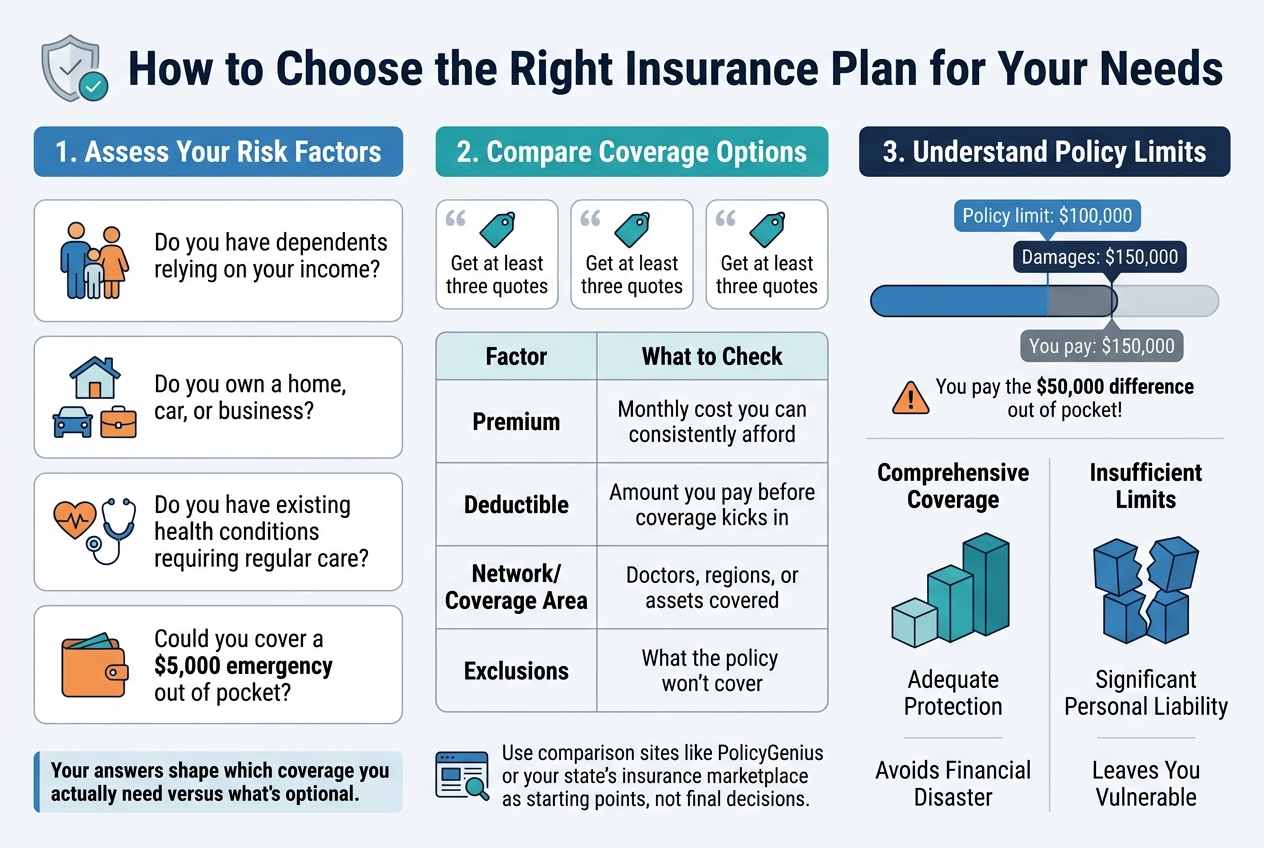
Start by honestly evaluating what you stand to lose. Key questions to ask:
- Do you have dependents relying on your income?
- Do you own a home, car, or business?
- Do you have existing health conditions requiring regular care?
- Could you cover a $5,000 emergency out of pocket?
Your answers directly shape which coverage you actually need versus what's optional.
Comparing Coverage Options Without Getting Overwhelmed
Break it down into three columns:
Factor | What to Check |
Premium | Monthly cost you can consistently afford |
Deductible | Amount you pay before coverage kicks in |
Network/Coverage Area | Doctors, regions, or assets covered |
Exclusions | What the policy won't cover |
Get at least three quotes. Use comparison sites like PolicyGenius or your state's insurance marketplace as starting points, not final decisions.
Understanding Policy Limits and What They Mean for You
A policy limit is the maximum your insurer will pay per claim or per year. If your limit is $100,000 but damages hit $150,000, you're personally responsible for the gap.
Watch for:
- Per-occurrence limits – cap per single event
- Aggregate limits – annual maximum payout
- Sub-limits – lower caps on specific items like jewelry or electronics
Always match your limits to your actual asset value.
+ Add Section
Common Insurance Mistakes That Cost Americans Money
Buying Too Little Coverage to Save on Premiums
Choosing the cheapest plan feels smart until a major accident or illness arrives. Skimping on coverage to save $50 monthly can easily result in $50,000 out-of-pocket costs. Always weigh the premium savings against realistic worst-case scenarios.
Not Reading the Fine Print Before Signing a Policy
Policies contain exclusions, waiting periods, and claim limits that catch people completely off guard. Pay close attention to:
- Exclusions – what your policy specifically won't cover
- Deductibles – the amount you pay before insurance kicks in
- Coverage limits – the maximum your insurer will pay out
Failing to Update Coverage After Major Life Changes
Your insurance needs shift dramatically when life changes. Getting married, having a baby, buying a home, or changing jobs all require a coverage review. Outdated policies leave real gaps that end up costing serious money.
Life Event | Coverage to Review |
Marriage | Health, auto, life |
New baby | Life, health |
Home purchase | Homeowners, umbrella |
Job change | Health, disability |
Missing Out on Available Discounts and Bundling Options
Most Americans leave money on the table by not asking about discounts. Bundling home and auto insurance alone can save 15–25%. Safe driver programs, loyalty discounts, and good credit scores also bring premiums down significantly.
+ Add Section
Smart Ways to Lower Your Insurance Costs in the USA
How a Good Credit Score Can Reduce Your Premiums
Most insurers in the USA use your credit score to set your rates — and the difference can be hundreds of dollars annually. A strong credit score signals financial responsibility, which insurers associate with fewer claims.
Quick ways to improve your score:
- Pay bills on time, every time
- Keep credit card balances below 30% of your limit
- Avoid opening multiple new accounts at once
The Benefits of Bundling Multiple Policies Together
Buying your home and auto insurance from the same provider typically saves 10–25% on both policies. Insurers reward loyalty and reduced administrative costs by passing savings back to you.
Bundle Combination | Average Savings |
Home + Auto | 10–25% |
Auto + Life | 5–15% |
Home + Auto + Life | Up to 30% |
When Raising Your Deductible Actually Saves You Money
A higher deductible means lower monthly premiums. This strategy works best when you have emergency savings to cover the gap if something goes wrong.
For example, raising your deductible from $500 to $1,000 could cut premiums by 15–20% annually. If you're a safe driver or rarely file claims, that trade-off pays off quickly.
+ Add Section
Conclusion
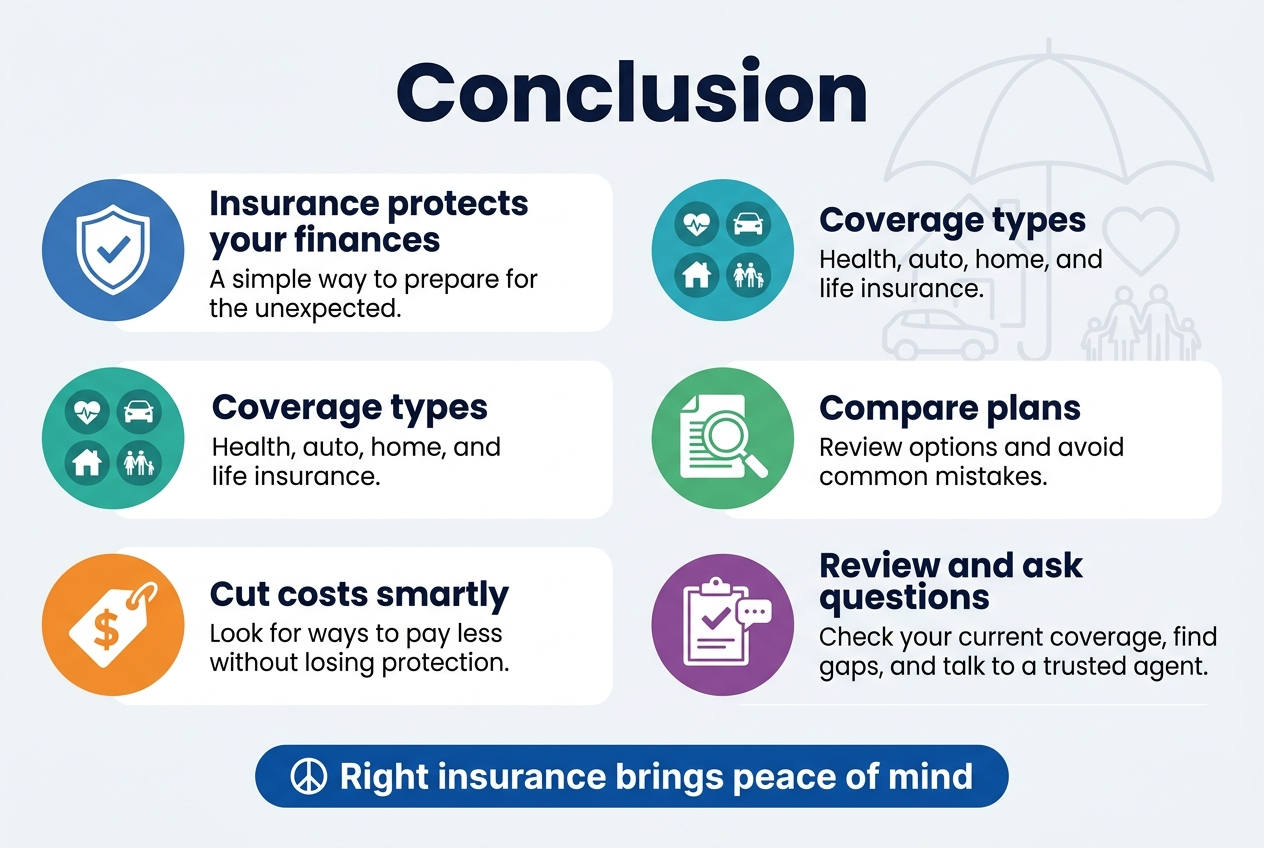
Insurance doesn't have to be confusing or overwhelming. At its core, it's simply a way to protect yourself and your family from financial disaster when life throws something unexpected your way. From health and auto to home and life insurance, having the right coverage means you won't be left scrambling when things go wrong. And with so many options available, taking the time to compare plans, avoid common mistakes, and look for smart ways to cut costs can make a real difference in what you pay.
The best move you can make right now is to take a honest look at your current coverage and ask yourself if it's actually working for you. Are you paying too much? Are there gaps leaving you exposed? A little research and a conversation with a trusted insurance agent can go a long way. Don't wait until something goes wrong to figure it out — the right insurance plan, chosen wisely, gives you peace of mind and keeps your finances protected no matter what comes your way

Để lại bình luận
Địa chỉ email của bạn sẽ không được công khai. Các trường bắt buộc được đánh dấu *