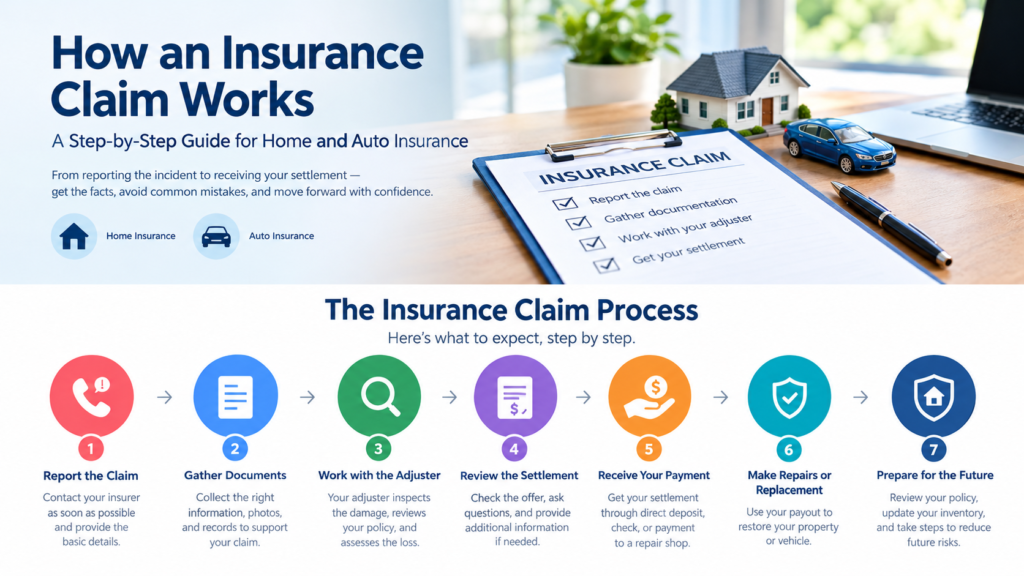
Filing an insurance claim for the first time can feel overwhelming, especially when you’re already dealing with the stress of an accident, property damage, or an unexpected loss. If you’ve never filed a claim before, you may have questions about where to start, what documents you’ll need, how the insurance adjuster works, and how long it might take to receive a settlement.
This guide explains the insurance claim process step by step, from reporting an incident and gathering documentation to reviewing the insurer’s decision and understanding your payment options.
Whether you’re filing a homeowners insurance claim or an auto insurance claim in the United States, understanding what to expect can help you prepare, avoid common mistakes, and communicate more effectively with your insurance company.
No confusing jargon. No unnecessary guesswork. Just a practical walkthrough to help you navigate the process with greater confidence.
Understanding the Basics of an Insurance Claim
What Is an Insurance Claim?
An insurance claim is a formal request asking your insurance company to provide benefits or payment for a loss that may be covered by your policy.
For example, you might file a homeowners insurance claim after a covered fire damages your house or an auto insurance claim after a covered collision damages your vehicle.
After receiving your claim, the insurer typically reviews the circumstances, investigates the loss when necessary, examines the applicable policy provisions, and determines whether benefits are payable.
Filing a claim does not automatically mean it will be approved. Coverage depends on the facts, policy terms, exclusions, limits, deductibles, and applicable state law.
What Makes an Insurance Claim Eligible for Coverage?
Several factors may influence whether an insurance company pays a claim.
1. The policy was in effect. The incident generally needs to fall within the applicable coverage period, subject to the policy’s specific terms.
2. The loss falls within the policy’s coverage. The type and cause of the damage must qualify under the relevant coverage provisions. Some events may be excluded or subject to special limitations.
3. The policy’s conditions are satisfied. Requirements may include timely notice, cooperation with the investigation, and providing requested information.
4. Applicable limits and deductibles are considered. Even when a loss is covered, the amount payable depends on the policy limits, deductible, valuation provisions, and other applicable conditions.
If an insurer denies a claim or limits its payment, request an explanation and review the relevant policy language. The reason for the decision matters, and different circumstances may require different next steps.
Key People Involved in the Claims Process
Several people may participate in a claim, depending on its complexity.
| Person | Role |
|---|---|
| Policyholder | Reports the incident, provides information, and cooperates with the claims process. |
| Insurance adjuster | Investigates the loss, evaluates the damage, and assesses the claim under the policy. |
| Claims representative | Communicates claim updates, explains requirements, and helps coordinate the process. |
| Contractors or repair professionals | Inspect damage, prepare estimates, and perform authorized repairs. |
| Appraisers or other specialists | Provide additional assessments when needed. |
| Public adjuster | Represents a policyholder in certain property insurance claims, generally for a fee. |
The people involved will depend on the claim. A straightforward auto damage claim may require fewer steps than a major homeowners claim involving structural damage.
Common Types of Insurance Claims
This guide focuses on two common types of insurance claims.
Homeowners insurance claims: These may involve covered fire damage, wind damage, theft, certain types of water damage, or personal liability incidents. Coverage depends on the policy, cause of loss, and applicable exclusions.
Auto insurance claims: These may involve vehicle collisions, theft, vandalism, weather-related damage, or liability for injuries and property damage, depending on the coverage purchased.
Understanding the type of claim you’re filing can help you identify which documents to gather and which policy provisions to review.
Reporting Your Insurance Claim the Right Way
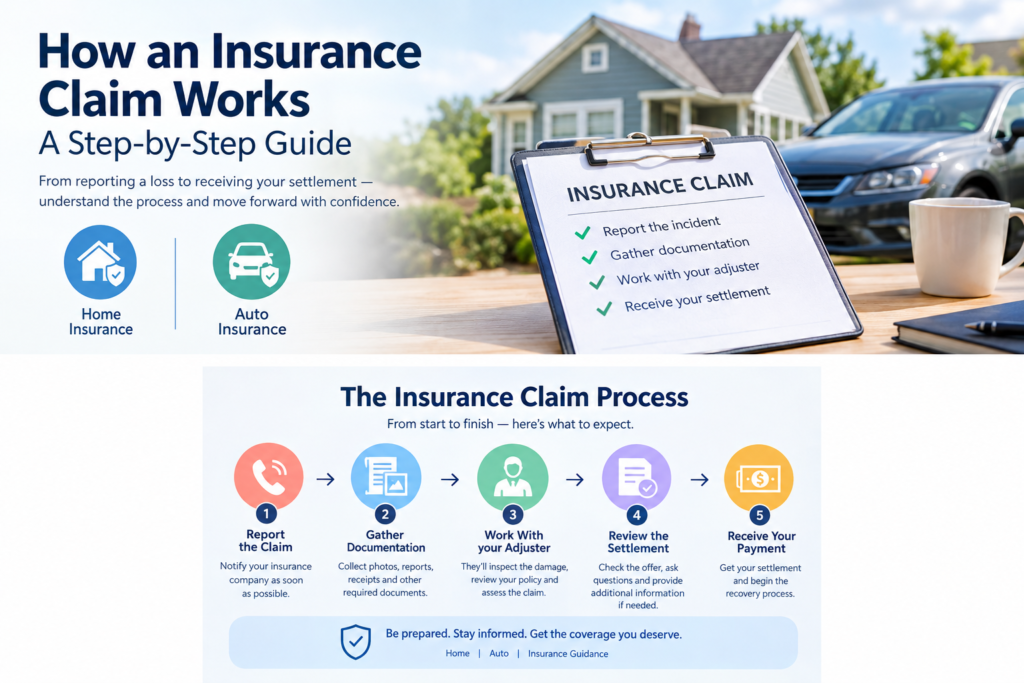
When and How Should You Notify Your Insurance Company?
Report an incident as soon as reasonably possible and follow the notice requirements in your policy. Some policies and circumstances have specific reporting deadlines, so waiting unnecessarily may create complications.
You can usually report a claim through one of the following methods:
- Calling your insurer’s claims department.
- Using the insurer’s website or mobile app.
- Contacting your insurance agent, if applicable.
- Following the reporting instructions on your insurance documents.
If you’ve been involved in a car accident, prioritize safety first. Contact emergency services when needed, follow applicable reporting requirements, and avoid putting yourself at risk to collect information.
For property damage, take reasonable steps to prevent further damage when it is safe to do so, and notify your insurer promptly.
What Information Should You Have Ready?
You don’t need to know every detail before reporting an incident. However, having basic information available can make the conversation easier.
Depending on your claim, prepare:
- Your policy number, if available.
- The date, approximate time, and location of the incident.
- A factual description of what happened.
- Contact details for other parties involved, when applicable.
- Photographs or videos of the damage, if available.
- Police or incident report information, if applicable.
- Any immediate safety concerns or emergency repairs.
If you’re uncertain about a detail, say so rather than guessing. You can provide additional information as it becomes available.
Choosing the Best Way to File Your Claim
| Method | When It May Be Useful |
|---|---|
| Phone | When you need immediate assistance or have a complicated situation to explain. |
| Mobile app | When your insurer supports quick reporting and photo uploads. |
| Online portal | When you want to submit information and documents electronically. |
| Insurance agent | When you need help understanding how to report the claim or whom to contact. |
The available options vary by insurer and policy. Choose a method that allows you to report the incident promptly and retain confirmation of your submission.
Common Mistakes to Avoid When Reporting a Claim
A few simple precautions can help prevent confusion and unnecessary delays.
Avoid guessing. Provide accurate information and distinguish what you know from what you believe may have happened.
Keep records. Save claim numbers, confirmation messages, emails, and relevant documents.
Don’t admit fault or speculate about liability. After an auto accident, exchange the required information and cooperate with the appropriate investigation. Avoid making unsupported conclusions about who is legally responsible.
Don’t ignore follow-up requests. Respond to reasonable requests for documents and clarification within the applicable deadlines.
Don’t assume every loss is covered. Report the incident and let the insurer evaluate the facts under the policy.
Gathering and Submitting the Right Documentation
What Documents Might an Insurance Claim Require?
The documents required depend on the type of claim, the circumstances, and the insurer’s investigation. Not every claim requires every document listed below.
| Document | Why It May Be Needed |
|---|---|
| Policy information or declarations page | Helps identify coverage, limits, and deductibles. |
| Photographs and videos | Show the condition of damaged property or vehicles. |
| Proof of ownership | Helps establish ownership and the value of damaged or stolen items. |
| Police or incident report | May help document an accident, theft, vandalism, or other reported incident. |
| Repair estimates or invoices | Help establish the expected or actual cost of repairs. |
| Receipts and purchase records | May support the value of damaged or missing belongings. |
| Medical records and bills | May be relevant to covered injury claims. |
| Receipts for temporary repairs or additional expenses | May help document expenses potentially covered under the policy. |
Ask your insurer which documents are required for your specific claim. Keep copies of everything you submit, and avoid sending original documents unless they are specifically required.
How to Document Damage or Loss Properly
Good documentation can make it easier for an insurer to understand what happened and evaluate the damage.
When it is safe and appropriate:
- Take clear photographs and videos from multiple angles.
- Capture both close-up details and wider views that show the surrounding area.
- Create an inventory of damaged or stolen belongings, including descriptions, approximate ages, and estimated values.
- Save receipts, repair estimates, and other supporting records.
- Keep damaged items when practical until the insurer advises whether they need to be inspected.
For auto claims, photograph the vehicle damage and relevant details of the accident when safe. For homeowners claims, document affected rooms, building materials, belongings, and visible damage.
If emergency repairs are necessary to prevent additional damage, take reasonable protective measures when safe and keep receipts. For example, temporary measures may be needed to protect a damaged roof from further rain.
Contact your insurer about the appropriate next steps before undertaking extensive permanent repairs when circumstances allow. Follow any applicable emergency instructions and policy requirements.
Tips for Organizing Your Claim Evidence
| Organization Tip | Why It Helps |
|---|---|
| Create a dedicated digital or physical folder | Keeps claim-related documents together. |
| Label photographs and files clearly | Makes it easier to identify the incident, location, and date. |
| Keep copies of submitted documents | Gives you a record of what you provided. |
| Maintain a communication log | Helps you track conversations, requests, and agreed next steps. |
| Save receipts for related expenses | Helps document costs that may be relevant to the claim. |
| Confirm document submissions | Helps you identify missing information or technical problems. |
Good organization won’t guarantee claim approval, but it can make the process easier to manage.
Working With Your Insurance Adjuster
What Does an Insurance Adjuster Do?
An insurance adjuster evaluates a claim on behalf of an insurance company or, in some circumstances, another party. The adjuster may inspect the damage, review photographs and documents, speak with involved parties, and assess the loss under the applicable policy.
Some adjusters are employed directly by insurers, while independent adjusters may be engaged to handle claims on an insurer’s behalf.
The adjuster’s findings help the insurer determine how the claim should be handled. Understanding this role can help you ask informed questions and provide relevant evidence.
How to Prepare for an Adjuster’s Inspection
Before an inspection, organize your documentation and make sure you understand the purpose of the visit.
Consider the following steps:
- Collect photographs and videos taken after the incident.
- Prepare a list of damaged items or affected areas.
- Gather available receipts, repair estimates, and ownership records.
- Make relevant policy documents available.
- Write down questions about the damage, coverage, or next steps.
- Explain any areas you believe have not been fully assessed.
Do not delay necessary emergency measures simply to wait for an inspection. Document the original damage when possible, keep receipts, and coordinate with the insurer about further repairs.
Understanding the Adjuster’s Findings
After investigating a claim, the adjuster may prepare an estimate, report, or other assessment. The format and level of detail depend on the claim.
Review the findings carefully and compare them with your own records.
| What to Review | Why It Matters |
|---|---|
| Scope of damage | Helps you check whether all relevant damage was considered. |
| Repair estimates | Allows you to compare proposed work and costs with available evidence. |
| Applicable coverage | Helps you understand which policy provisions apply. |
| Deductible | Affects the amount payable for covered losses. |
| Depreciation or valuation | May affect the payment under the policy’s valuation method. |
| Exclusions or limitations | May explain why certain damage or expenses were not included. |
If something appears to be missing or unclear, ask the adjuster or claims representative for an explanation.
What if You Disagree With the Adjuster’s Assessment?
You do not have to remain silent if you believe the assessment overlooks relevant damage or misinterprets the applicable coverage.
Consider these steps:
1. Request clarification. Ask the insurer to explain the assessment, including any excluded items, depreciation, or coverage limitations.
2. Provide supporting evidence. Submit additional photographs, receipts, contractor estimates, or other relevant documentation.
3. Request another inspection when appropriate. Explain which areas or items you believe need further evaluation.
4. Review your policy’s dispute provisions. Some policies include appraisal procedures or other mechanisms for resolving disagreements about the amount of a loss. These procedures may have specific requirements and limitations.
5. Consider additional assistance. A licensed public adjuster or an attorney may be appropriate in certain circumstances. Understand any fees, qualifications, and potential limitations before hiring someone.
6. Contact your state insurance department if necessary. The department may explain complaint procedures and help you understand your available options.
A disagreement does not automatically mean the insurer has acted improperly. Focus on the facts, supporting evidence, policy wording, and the specific reason for the dispute.
Keeping Communication Clear and Productive
Communication is an important part of managing an insurance claim.
Whenever possible, keep a written record of important conversations and decisions. If you discuss something significant by phone, consider sending a brief email confirming your understanding.
Record:
- The date and time of the communication.
- The name and contact information of the person you spoke with.
- Any documents requested.
- Important explanations or decisions.
- The next steps and applicable deadlines.
Stay professional and factual, even when you disagree with an assessment. Clear communication and organized records can help resolve misunderstandings and make it easier to track your claim.
Understanding Your Insurance Claim Settlement
How Do Insurance Companies Calculate a Claim Payment?
An insurance company does not simply choose a payment amount without evaluating the claim. The settlement depends on the applicable policy terms, the covered damage or loss, the relevant valuation method, the deductible, and the available coverage limits.
Depending on the claim, the insurer may consider repair estimates, replacement costs, medical bills, property assessments, or other supporting evidence.
For example, if an auto policy covers $4,000 in eligible vehicle damage and the applicable deductible is $500, the payment could be $3,500, assuming no other adjustments, limitations, or payment conditions apply.
This is a simplified example. Actual payments depend on the policy, claim facts, and applicable requirements.
Actual Cash Value vs. Replacement Cost
Actual cash value (ACV) and replacement cost are two valuation methods that may affect how much an insurer pays for covered property damage.
| Valuation Method | General Meaning |
|---|---|
| Actual Cash Value (ACV) | Generally reflects the property’s value at the time of the loss, often accounting for depreciation under the applicable policy. |
| Replacement Cost | Generally refers to the cost of repairing or replacing covered property with comparable property, subject to the policy’s terms and limits. |
Example: Imagine a television is damaged in a covered incident. Replacing it with a comparable new television costs $800, while its value immediately before the loss is estimated at $350 after depreciation.
Under an ACV provision, the valuation may be based on the $350 value, subject to the policy terms and deductible. Under a replacement-cost provision, the policy may allow payment based on the cost of a comparable replacement, subject to its conditions and limits.
Some replacement-cost policies initially pay ACV and release additional recoverable depreciation after qualifying repairs or replacement. The timing and requirements depend on the policy.
Neither valuation method is automatically best for every person. Review the policy language, limits, deductibles, and any conditions governing payment.
What Should You Do if Your Claim Is Denied or Underpaid?
Receiving a denial or a payment lower than expected can be frustrating. Before deciding what to do next, find out exactly why the insurer reached its decision.
1. Request the explanation in writing. Ask the insurer to identify the reasons for the denial or the items excluded from its estimate.
2. Review the applicable policy language. Check the coverage provisions, exclusions, limits, deductibles, and relevant conditions.
3. Gather additional evidence. Depending on the disagreement, photographs, receipts, expert assessments, or detailed repair estimates may help clarify the loss.
4. Ask about internal review or reconsideration. Provide a clear explanation of the issue and the evidence supporting your position.
5. Review dispute-resolution options. Your policy may contain an appraisal clause or other procedures, subject to specific terms.
6. Contact your state insurance department. If you believe the claim was handled improperly, your state regulator may explain how to submit a complaint or obtain consumer assistance.
For complex or high-value disputes, consider seeking advice from a qualified professional. Public adjusters generally handle certain property claims for policyholders, while attorneys may help with legal disputes. Fees and applicable rules vary.
Do not assume every denial is incorrect or every low offer is unfair. Understanding the insurer’s reasoning is the first step toward deciding how to proceed.
Receiving Your Settlement and Moving Forward
How and When Will You Receive Your Claim Payment?
If the insurer approves payment, the method and timing depend on the insurer’s procedures, the claim, applicable law, and any outstanding requirements.
Payment may be made through methods such as:
- Electronic payment or direct deposit, where available.
- A check mailed to the policyholder.
- Payment to a repair facility or contractor under an agreed arrangement.
- Payment involving a mortgage lender or other party with an interest in the insured property, where applicable.
Some property claims involve multiple payments, such as an initial payment followed by additional recoverable depreciation after repairs. Other claims may require further documentation before payment can be completed.
Ask your insurer what has been approved, how payment will be issued, whether any requirements remain, and when you can reasonably expect the next update.
Keep settlement documents, payment records, and related receipts for your files.
How Should You Use Your Insurance Payout?
When a claim payment arrives, first understand what the payment covers and whether additional payments or obligations may apply.
Depending on your claim, useful next steps may include:
- Arranging the covered repairs or replacement.
- Paying eligible expenses you incurred while responding to the loss.
- Keeping invoices and proof of completed work.
- Confirming whether additional documentation is required.
- Following up with the insurer if part of the approved settlement remains outstanding.
For homeowners claims, a mortgage lender may be involved in controlling or releasing certain repair funds. Review the instructions provided by the lender and insurer before spending those funds.
If the payment seems insufficient to complete the covered repairs, contact your insurer and explain the difference with supporting documentation. Do not assume that every additional expense will be reimbursed.
How to Prepare for Future Insurance Claims
Experiencing a loss can be a useful reminder to review your insurance arrangements and improve your recordkeeping.
Review your policy periodically. Make sure you understand your coverage limits, deductibles, exclusions, and important reporting requirements.
Create a home inventory. Keep a record of valuable belongings, including photographs, receipts, and identifying details where practical.
Keep vehicle records organized. Save relevant registration information, repair records, policy details, and other documents that may be useful after an accident.
Understand your deductibles. Know how much you may have to pay out of pocket for different types of covered losses.
Maintain your property and vehicle. Routine maintenance may help reduce certain risks, although maintenance cannot prevent every loss and insurance coverage still depends on the policy.
Save your insurer’s contact information. Knowing how to report an incident can save time during a stressful situation.
A little preparation can make it easier to locate important information and understand your options if you need to file another claim.
Frequently Asked Questions About Insurance Claims
How long does an insurance claim take?
There is no single timeline that applies to every insurance claim. A straightforward claim may be resolved relatively quickly, while complex claims involving extensive damage, additional inspections, liability questions, or disputes may take longer. State laws may establish specific claim-handling deadlines. Ask your insurer about the expected next steps and any applicable deadlines.
Can I file an insurance claim without a police report?
Sometimes. A police report may be relevant or required for certain incidents, such as theft or some vehicle accidents, but not every insurance claim requires one. Requirements depend on the circumstances, applicable law, and the insurer’s documentation needs.
Should I repair the damage before the adjuster visits?
You may need to make reasonable temporary repairs to prevent further damage or protect people from danger. Document the damage first when safe, retain receipts, and coordinate with your insurer before extensive permanent repairs when practical. Follow emergency instructions and applicable policy requirements.
What happens if I disagree with the settlement amount?
Ask the insurer to explain its assessment and identify the policy provisions used. Submit additional evidence if relevant, request reconsideration, and review any applicable dispute-resolution procedures. Your state insurance department may also provide consumer assistance.
Can an insurance company deny my claim?
Yes. A claim may be denied when the loss is not covered, an exclusion or limitation applies, or relevant policy conditions have not been met, among other reasons. The specific circumstances matter. Request a written explanation and review the applicable policy provisions if your claim is denied.
Will filing an insurance claim increase my premium?
It depends on the type of claim, insurer, coverage, state regulations, and other relevant factors. Filing a claim does not automatically mean your premium will increase, and the effect cannot be predicted for every situation. Ask your insurer how claims may affect your policy and future pricing.
Can I withdraw an insurance claim after filing it?
You can contact your insurer to ask about withdrawing or closing a claim, but the consequences depend on the circumstances, policy, and applicable requirements. Reporting a loss and receiving payment are separate matters, and withdrawing a claim does not necessarily mean the incident will have no effect on your insurance record. Ask your insurer how the decision may affect you before proceeding.
Conclusion
Navigating an insurance claim does not have to feel overwhelming. From reporting an incident promptly and gathering the right documentation to working with an adjuster and reviewing a settlement, each step helps you understand how your claim is being evaluated.
The most important things you can do are keep accurate records, read the relevant policy provisions, respond to reasonable requests, and ask questions when something is unclear. If you disagree with an insurer’s decision, review the explanation, gather supporting evidence, and explore the appropriate options for resolving the issue.
No process can guarantee claim approval or a particular payment, but understanding what to expect can help you approach the experience more confidently.
Don’t wait until an accident or unexpected loss occurs to become familiar with your policy. Take a few minutes today to review your coverage, save your insurer’s contact information, and organize important documents. A little preparation now can make the claims process easier to navigate when you need it.
InsuranceGuide.online helps you understand home and auto insurance through clear, practical educational guides. Explore our resources to learn more about coverage, deductibles, policy exclusions, and insurance claims.
Disclaimer
This article provides general educational information about homeowners and auto insurance in the United States. It is not legal advice or individualized insurance advice and does not replace the terms of your insurance policy or guidance from a qualified professional.
Coverage, exclusions, deductibles, claims procedures, and legal requirements vary by policy, insurer, and state. Always review your policy documents and consult your insurer, state insurance department, or an appropriately licensed professional for advice about your specific circumstances.
Additional Resources
For more information, consult these consumer resources:
- National Association of Insurance Commissioners (NAIC) — Consumer information about insurance coverage and claims.
- NAIC: State Insurance Departments — Find your state’s insurance regulator.
- Insurance Information Institute — Educational resources about homeowners and auto insurance.